Author: Amy Nam

  • True Crime as Literature: How Capote Changed the Genre

    True Crime as Literature: How Capote Changed the Genre

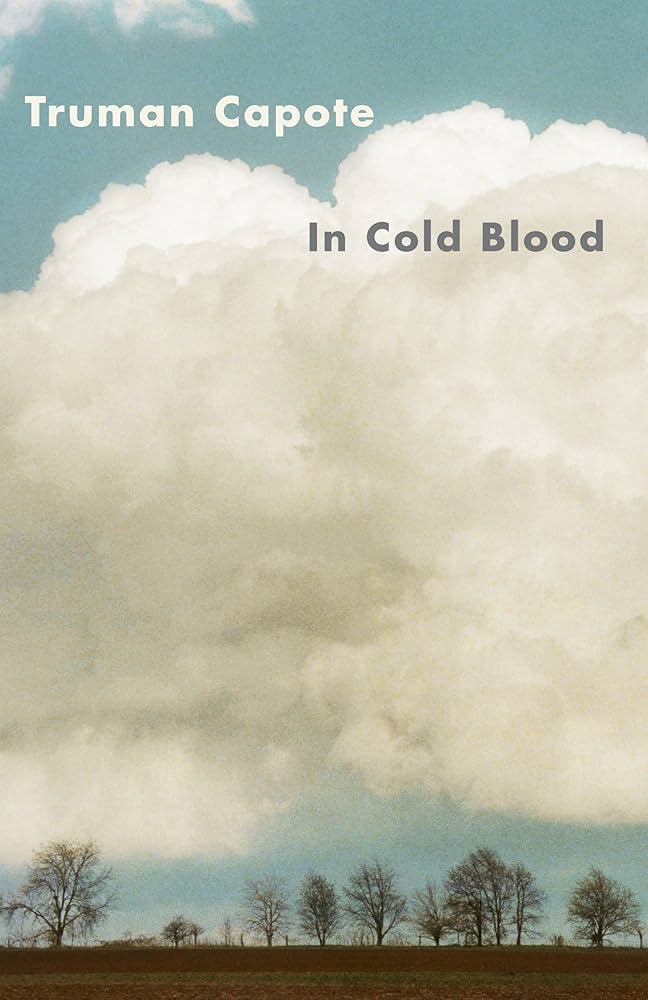
    When Truman Capote published In Cold Blood in 1966, he didn’t just change the narrative for how crimes could be recounted, he redefined the way crime could be written. The brutal murder of the Clutter family in Holcomb, Kansas, may have been covered in newspapers and court documents, but Capote’s project was bigger, taking the tools of fiction and applying them to a fact, something that had never been done before. The result was what he went on to call a “nonfiction novel,” though his work blurred the boundary between journalism and literature, changing both forever. 

    The Birth of the Nonfiction Novel

    Before Capote, reporting on crime was factual, concise, and astringent.  In Cold Blood is read almost as a novel, with its pacing, character build-up, and plot progression, developing the back-story of each of the players, as Capote not only immerses the reader in the crime but also in the lives of the Clutters, their town, and even their killers, Perry Smith and Richard Hickock.

    This was newsworthy in that Capote not only was knocking down more information about what happened, but he was shaping it into a story. Claiming all the information to be fact, he invested painstaking amounts of time studying interviews and documents, refining his writing style to take the facts he did uncover and fashion them into a novel that read like prose, thus creating a new genre, long-form narrative nonfiction, true crime made literary.

    Style as Substance

    What makes In Cold Blood feel like literature isn’t simply the length or the research, it’s Capote’s style and detail. He writes scenes cinematically, shifting perspectives between the Clutter family, the killers, and the investigators, building suspense even when readers already know the outcome going into the book.

    For example, his description of Perry Smith reads to be almost sympathetic, and could even be described as lyrical:

    “His voice was both gentle and prim — a voice that, though it was not meant to be, seemed nevertheless patronizing, a voice that, like his handwriting, was more elegant than his appearance warranted.”

    Capote renders Perry with the depth of a tragic character, not a flat villain. This at first, could have been seen to be controversial because readers asked if he was humanizing a murderer too much? However, this literary approach was the exact reason that allows the book to endure. 

    By forcing his readers to sit with complexity rather than easy moral categories, Capote was able to emphasize the true tragedy in the situation whilst also providing the details that allowed the killers, the victims, and even the town of Holcomb to emerge as fully human, rather than as stock figures in a crime story.”

    Capote’s genius wasn’t only in portraying the killers or the victims, which was new to readers, but his genius also lied in the fact that he expanded the lens of his story to include EVERYONE touched by the crime. Giving us pages of details on Detective Alvin Dewey, the Kansas Bureau of Investigation agent assigned to the case, not just as a professional but as a husband and father, we learn about how his long nights of investigation strained his marriage, his health, and even how his children saw the world as they overheard whispered conversations about murder. By this in depth research, Capote was able to show how the shadow of the case bleeds into the private life of a family that never even knew the Clutters personally.

    This was radical for true crime writing, because before, when stories were told about murders, people tended to focus more exclusively on the brutality of the act itself or on the personalities of the perpetrators. While that is not wrong, the supporting figures such as the detectives, neighbors, and jurors, have always faded into anonymity, though still being highly affected and even traumatized. Capote refused to continue erasing the stories of those who were involved at smaller scales, insisting that their humanity matters too, and that the “collateral” people in a tragedy carry wounds that are often invisible.

    That level of detail could be part of why the book was and remains so controversial, as some critics could argue that Capote was intruding too deeply by exposing too much, and weaving in all these other people from the community. But I believe this is precisely what made the book so important, as by weaving together the killers’ psychological complexity, the victims’ daily lives, and the unforeseen consequences for everyone connected to the case, Capote created a kind of journalism that was unprecedented in scope that also raised more awareness.

    Capote introduced this journalism that held the density of a novel, being layered, detailed, and emotionally textured. Allowing readers to feel the gravity and depth of each situation, not just the horror of the crime scene itself, he created this new genre that allowed journalism and fiction to almost coexist, despite coming from opposite sides of literature. Showing the way murder rearranges a community’s sense of safety, altering family dinners, and lingering in the minds of strangers who never met the Clutters, Capote invited his readers to consider how killers plan and rationalize, how motives form, and how violence is rarely random but shaped by patterns of thought and circumstance.

    Why It Matters

    By writing crime as literature, Capote expanded what readers expected from nonfiction, showing that true facts could be as gripping as fiction was if it was shaped with more narrative care and structure. His level of immersion influenced everything that came after, from long-form magazine reporting to the explosion of narrative true crime podcasts. Capote’s work showed that facts didn’t need to be dry; they could be rendered with the depth of literature, and in doing so, they could change how society remembers and processes violence. His influence through this novel can still be seen today, from long form magazine features, to podcasts like Serial, and even Netflix docuseries today. The “true crime boom” owes its birth to Capote’s experiment with In Cold Blood.

    At the same time, however, his work raises ethical questions that are still relevant when thinking about the evolution of the true crime genre in media content today: where is the line between storytelling and exploitation? Can a writer or storyteller ever be completely objective when turning lives and deaths into a narrative? These debates are part of Capote’s legacy too, and are important to consider when consuming true crime content. It is important for consumers to realize that while these types of content carry some small “entertainment” factor, it shouldn’t be for entertainment, but for awareness. 

    Why In Cold Blood Was So Controversial

    For all its literary brilliance, In Cold Blood has always lived under a cloud of controversy. Even though Capote insisted that every word was true, claiming he had “invented nothing”,  close readers and critics later pointed out some discrepancies. The most famous is the graveyard scene at the end of the book, in which detective Alvin Dewey supposedly speaks with Nancy Clutter’s friend beside her grave, a moment of closure that was never confirmed to have actually happened. Other details, like Capote’s depiction of Bonnie Clutter’s depression or the speed with which Dewey pursued key leads, were disputed by survivors and colleagues.

    Even more debated was Capote’s sympathetic portrayal of Perry Smith. Some scholars argue Capote projected elements of himself onto Smith, making him more articulate, intellectual, and poetic on the page than in real life. The result is a murderer who reads less like a one-dimensional criminal and more like a tragic anti-hero. Was this literary empathy, or artistic distortion? That question still divides critics.

    Capote and Perry Smith: A Destructive Bond?

    Another controversy was the fact that Capote himself was unusually close to Perry Smith. Capote interviewed Smith in prison for years, going there often to conduct long interviews and even helping him with his appeals. Both men came from eerily similar backgrounds, having had broken childhoods, having been abandoned by their parents, and being extremely imaginative men. That identification with brokenness could have established a bond greater than reporting.

    Even some of Capote’s biographers are so far as to hold that Capote did love Smith, or became enamored with him at least. Whether or not that is true, it is at least sure that Capote’s emotional involvement could have affected what he wrote. Capote’s depiction of Smith is sympathetic, even loving, presenting him as more a victim of circumstance than as a cold-blooded killer. Critics debate whether this closeness violated Capote’s objectivity or allowed him to paint a richer and more compassionate picture than crime reporting had previously been able to.

    Legacy of Controversy

    These questions of fact, objectivity, and of the lines getting blurred between fact and fiction are as much a part of In Cold Blood’s heritage as the book itself. Capote brought literature and journalism into the same room, but the tension between the two was never resolved. His book raised the stakes for writing true crime, but left us with uncomfortable reservations about what it means to tell the truth.

    Conclusion

    In Cold Blood forever changed the way true crime would be documented. Capote proved that storytelling could deepen our understanding of real events, forcing us to confront not just what happened, but who people were, as victims and killers alike. In doing so, he built a new kind of book  where fact and art would have the chance to live uneasily side by side, as life often can be. 


    Question for Readers:
    Do you think true crime works best when told with literary flair, or should it remain closer to straightforward journalism?

  • Building and Rebuilding: Parallels Between The Fountainhead and Atlas Shrugged

    Building and Rebuilding: Parallels Between The Fountainhead and Atlas Shrugged

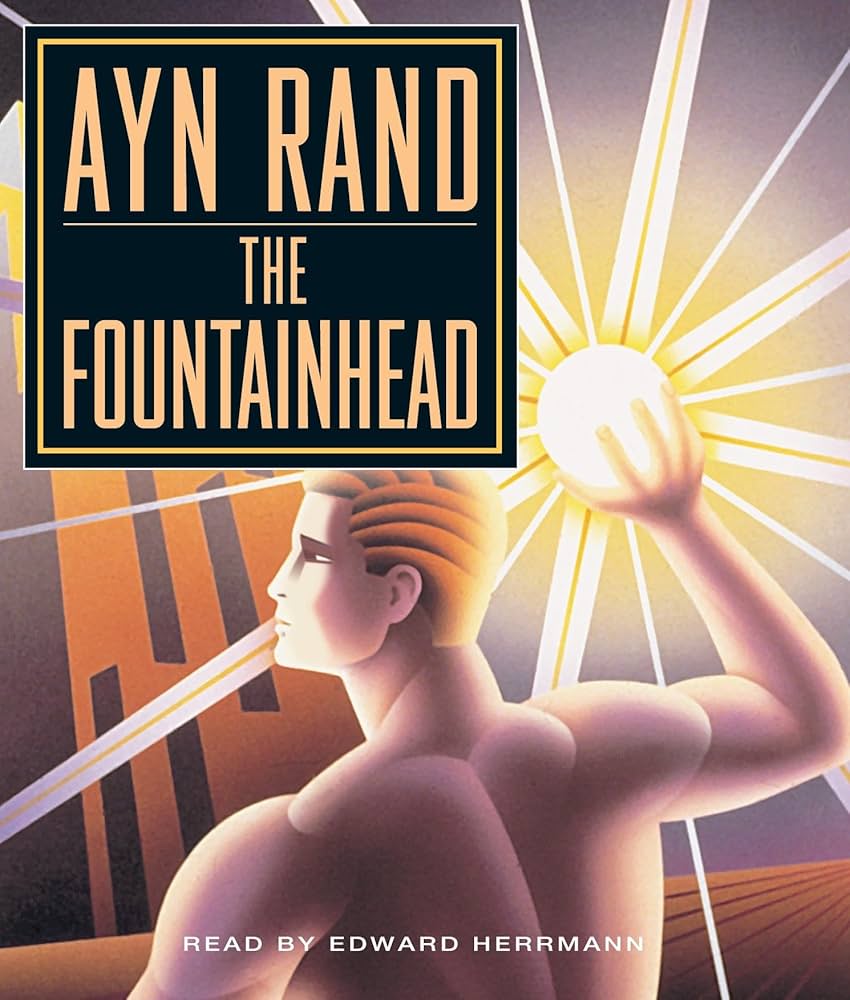
    Though Ayn Rand published The Fountainhead in 1943 and Atlas Shrugged in 1957, the two novels are less like distant siblings and more like different iterations of the same architectural blueprint. They both construct entire worlds around uncompromising individuals, people who live and breathe creation, and both novels dramatize the friction between the solitary genius and the weight of a society that demands conformity and normality. 

    After reading The Fountainhead, I immediately picked up Atlas Shrugged to see if they would be similar at all. Read side by side, the novels feel almost like drafts of the same story written at different scales, one being more intimate, the other epic, affecting characters on a much larger scale. Instantly being able to connect parallels to each other, I realized that the two stories were so much more similar than they let on to be. 

    The Fountainhead can be described as more like a single skyscraper, its foundations are set firmly in one man, Howard Roark’s story, while Atlas Shrugged is more focused upon the destiny of a sprawling industrial city, layered and expansive, populated by dozens of characters but still echoing the same structural lines.

    The Protagonists: Architects of More Than Buildings

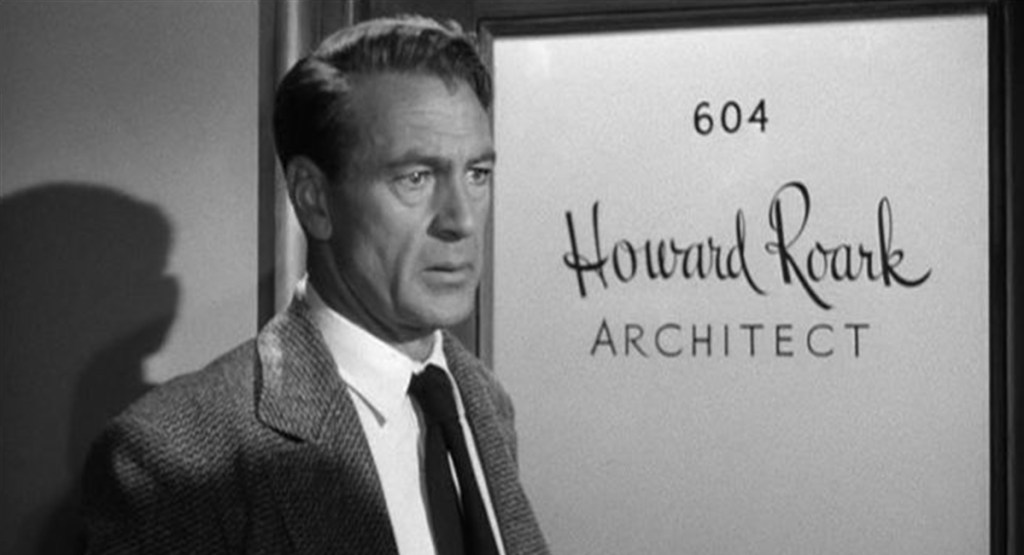
    In The Fountainhead, Howard Roark builds skyscrapers, his raw materials being stone, steel and glass, and his battlefield being the skyline of New York and its architectural society.  In Atlas Shrugged, Dagny Taggart builds railroads, forging paths across a collapsing America. On the surface, their tools differ, beams versus tracks, but in Rand’s narrative architecture, both are master builders who refuse to compromise on vision.

    For Roark, architecture is not a profession; it is an act of self-expression. He tells Austen Heller:

    “I don’t intend to build in order to have clients. I intend to have clients in order to build.”

    This reversal captures the essence of his philosophy in that he believes creation comes first, and the world has only the choice to adapt or fall away. Dagny could have said the same in her defense of the John Galt Line, in her desperate efforts to keep their trains running when the rest of society crumbles. For both, work is not a means to an end but the end itself, and the justification for existence.

    Rand gives her protagonists different contexts but almost the same DNA. Both are uncompromising creators, standing as counterpoints to a world where compromise is celebrated as virtue.

    The Antagonists: Voices of the Collective

    Rand’s villains are rarely monsters in the traditional sense; they are often smooth, persuasive, and cloaked in moralistic rhetoric. Ellsworth Toohey in The Fountainhead and James Taggart in Atlas Shrugged share this slipperiness. They preach values that sound noble in theory, such as selflessness, service, and equality, but they use them as weapons to undermine excellence, in execution being more than just noble beliefs.

    Toohey’s method is summed up in one of his most chilling lines to Peter Keating:

    “Don’t set out to raze all shrines — you’ll frighten men. Enshrine mediocrity — and the shrines are razed.”

    This encapsulates Rand’s warning, showing a lesson to her readers that evil doesn’t always attack openly, because sometimes it can act in whispers, manipulating and elevating the ordinary until greatness becomes unrecognizable behind the scenes.

    James Taggart employs the same strategy in Atlas Shrugged, hiding his mediocrity behind moral slogans, railing against “selfishness” and praising “the public good,” but deep down knowing that his true aim is to protect himself from competition, cloaking any fear he has as virtue and power, and ultimately fooling readers and characters alike about his true motives. The effect in both novels are the same, showcasing the sides of antagonists who don’t build anything by themselves, but feed parasitically on the accomplishments of others in their society.

    The Love Interests as Philosophical Foils

    Rand doesn’t treat love as sentimental ornament in her novels, because she uses them as functions of another arena where her and her character’s philosophy is tested. Dominique Francon in The Fountainhead and Hank Rearden in Atlas Shrugged serve similar narrative functions: they challenge the protagonist’s ideals by embodying the tension between personal loyalty and societal pressure.

    Dominique’s apparent betrayal of Roark, and her desires to destroy him are not rooted in malice only, but also in despair. Her attempts to ruin him aren’t so much rooted in her pure hatred of him, but more as a reflection of her hatred for society. She believes greatness cannot survive in a corrupt world, so she tries to destroy what she loves before others can, believing that they do not even deserve to witness his greatness and advance to the stage where they attempt to destroy him. Roark’s response to her is to remain unshaken, proving that his work, not her approval or disapproval, defines him, and he is indestructible.

    Rearden’s arc is different but no less revealing. At the beginning of Atlas Shrugged, he is a man divided, being a titan at work, but a guilty conformist at home. His affair with Dagny Taggart comes to the point where he learns to reject the false moral guilt imposed on him by society. By choosing Dagny and his own values over the demands of the looters, he finally integrates his life.

    In both cases, love is not a distraction from the work but a crucible, as it serves as a foil that sharpens Rand’s characters rather than softens them, forcing the heroes to clarify who they are when measured against another person, and if their beliefs will dwindle or not. 

    Narrative Scale: One Blueprint, Two Sizes

    Perhaps the most striking parallel between the novels is their scale. The Fountainhead is a tightly focused skyscraper, showing how one man’s life can become a case study for Rand’s ideals. It is narrow but tall, rising with singular intensity. Atlas Shrugged on the other hand is a sprawling industrial city, multi-layered, chaotic, full of highways, factories, boardrooms, and political intrigue.

    Yet the blueprint is the same, as they both introduce the uncompromising creator, pit them against collectivist antagonists, force them through personal and professional trials, and finally end with their vision vindicated and unbroken. The important difference between these two is that The Fountainhead shows this pattern on the scale of one man’s career, while Atlas Shrugged magnifies it to the scale of an entire civilization, magnifying its impacts to multiple states and within the whole industry.

    Why the Parallels Matter

    Taken together, the two novels reveal how Rand refined her literary vision. The Fountainhead asks: Can one person remain true in a corrupt world? Atlas Shrugged escalated those stakes, asking What happens to the corrupt world when all the true persons leave?

    In both cases, the answer is the same, in that while the world may collapse without its builders, the builders themselves often endure with the motivations of persevering and staying true to their values. Creation survives because integrity survives. The physicality of the skyscrapers designed may topple,and the railroads built may rust, but the spirit that conceived them proves to be indestructible to the end.

    Seen this way, Atlas Shrugged is not just a sequel in spirit to The Fountainhead but a necessary expansion. Rand began by showing us the individual who cannot be broken, then showed us the society that breaks when it drives such individuals away.

    Question for Readers:
    If you’ve read both novels, which protagonist do you find more compelling — Roark, the man who never wavers, or Dagny, the woman who fights to hold a collapsing world together?

  • Why Ayn Rand Gave Her Two Greatest Heroes the Same Initials

    Why Ayn Rand Gave Her Two Greatest Heroes the Same Initials

    Howard Roark and Hank Rearden: Same Initials, Same Spirit

    Though Howard Roark of The Fountainhead and Hank Rearden of Atlas Shrugged are separated by more than a decade of Ayn Rand’s writing career, they feel like variations of a single design, as two prototypes of the uncompromising individual. Both carry the same initials, H.R., as if stamped from the same philosophical blueprint, and that was the first similarity I noticed when first reading Atlas Shrugged after finishing The Fountainhead. Both are builders in the truest sense of the word, Roark with steel and stone, and Rearden with metal and industry. Both embody a vision of integrity that in Rand’s literary universe, are not a luxury but the foundation of human greatness.

    In comparing them, we see Rand’s narrative evolution, as she makes Roark to be the ideal made flesh from the very first page, the image of a man who will not bend no matter the cost. Rearden on the other hand is the image of the ideal she carries in progress, tested, refined, and ultimately purified by conflict. Together, they form two halves of Rand’s answer to the question: What does it mean to live for one’s own sake?

    Makers, Not Managers

    Roark designs skyscrapers that scrape against the sky while Rearden forges a metal that changes the face of industry. Their raw materials differ, but the relationship they have to their work is identical: creation itself is the point. The market, recognition, and approval are incidental, being mere byproducts of the act of making something new and necessary.

    For Roark, the job exists because the building demands to be built. He tells Austen Heller:

    “I don’t intend to build in order to have clients. I intend to have clients in order to build.”

    That inversion of the usual business logic, work for clients, encapsulates Roark’s philosophy: the creator’s purpose is to bring an idea into being, not to flatter the preferences of others.

    Rearden speaks in the language of industry, but the heartbeat is the same. When accused of selfishness for keeping control of Rearden Metal, he refuses to adopt the language of guilt:

    “I work for nothing but my own profit — which I make by selling a product they need to men who are willing and able to buy it.”

    Neither man views work as a social duty. For both, the moral center of their lives are the act of creation, the direct meeting between mind, material, and will.

    Isolation by Integrity

    Rand does not isolate her heroes through tragedy in the conventional sense, no sudden disasters or cruel twists of fate. Instead, isolation is the inevitable byproduct of their standards. Roark works alone because clients demand compromises he will not give; the integrity of the design is more important than the commission.

    Rearden, too, finds himself standing apart, most vividly at his trial for violating government regulations on the sale of his metal. He refuses to acknowledge the court’s moral authority, addressing them not as a penitent but as a man unwilling to apologize for achievement.

    In both cases, exile is not a wound but a badge. Social isolation becomes proof of their incorruptibility, a signal that they will not dilute themselves for the sake of acceptance. The world may shun them, but the novels make it clear: there is no greater corruption than belonging to a society on terms you cannot respect.

    Testing Grounds: Love and Loyalty

    Rand uses romance not as a subplot to humanize her heroes, but as another crucible for their values. Dominique Francon’s apparent betrayal of Roark, her public opposition to his work, is not a simple act of malice or misunderstanding. It is a deliberate attempt to shield him from the mediocrity of the world by destroying what she loves before others can corrupt it. Roark’s response is telling: he does not plead for her loyalty, nor alter his course to win it. His identity remains rooted in his work, not in her approval.

    Rearden’s arc with Dagny Taggart is less about sabotage and more about shedding the moral guilt imposed by others. In the early stages, Rearden’s life is divided: the productive, self-directed man at work and the socially compliant man at home. His relationship with Dagny forces him to confront that split — to accept that the values which guide his business must also guide his personal life.

    For both men, love becomes another proving ground for integrity. They do not adapt their principles to fit their relationships; they test their relationships against their principles.

    The Difference in Tone

    Here is where the two men diverge most clearly. Roark can be described as static in the best sense, as he begins and ends as the same unbending figure, never altering his beliefs and core values even as the novel progresses. The plot does not change him, but it instead reveals him. His trial is not about moral evolution but more about public vindication of what he already knows to be true.

    Rearden, by contrast, carries the weight of inherited moral codes. He begins as a man partially compromised, still seeking to reconcile his own achievement with a moral framework that condemns it. His arc is one of discarding, of burning away the inherited beliefs until nothing remains but his own judgment.

    It seems as if Rand used The Fountainhead to present the finished model, then used Atlas Shrugged to show the messy, human process of becoming that model.

    Same Letters, Same Blueprint

    The shared initials feel too deliberate to be coincidence. H.R. Howard Roark, Hank Rearden could just as easily truly stand for “Human Resilience.” Both men are designed to endure: to resist corrosion from outside pressure and to maintain their internal architecture under stress.

    They inhabit different worlds, as Roark’s New York skyline and Rearden’s industrial empire differ, but the principle they carry is the same: the creator exists for the sake of creation, and nothing else. The structures they leave behind, whether buildings or bridges, are less important than the act of building itself.

    Question for Readers:
    Do you find it more compelling to read about a hero who is already unshakable (Roark) or one who must fight his way to integrity (Rearden)?

  • How The Fountainhead Builds Its Characters Like Skyscrapers

    How The Fountainhead Builds Its Characters Like Skyscrapers

    Architect of the Self: Characterization in Ayn Rand’s The Fountainhead

    When most people talk about Ayn Rand’s The Fountainhead, they talk about its philosophy. And while its Objectivism pulses through every line, what makes the novel endure is not just the ideas, it’s the way those ideas are built into the characters’ bones. Rand doesn’t just argue; she personifies her philosophy, letting it course through the veins of each character she brings to life.

    Howard Roark: The Human Blueprint

    Howard Roark is not simply just a rebellious architect in the novel, but he is a complex architectural idea in human form. His design principles mirror his moral ones, as he believes and exudes that form follows function,and authenticity powers over imitation in the society he is stuck in.

    As Roark tells Austen Heller:

    “I don’t intend to build in order to have clients. I intend to have clients in order to build.”

    This inversion captures his role in the novel: creation for its own sake, not for the sake of approval. Rand uses Roark’s uncompromising standards to embody her central ideal, in that the individual’s integrity is non-negotiable and one of the only true ideals he can hold onto, as it is the only thing he has control over.

    Dominique Francon: The Mirror and the Challenger

    Dominique is often misunderstood as contradictory, as her whole existence as a character acts as a kind of paradox in itself. She both loves Roark and works to destroy him, grappling with the struggles of the reality of her society and her own personal beliefs that she holds. Though she eventually develops and realizes that Roark can never be destroyed, she goes through a journey of living this contradiction at an extreme. But through a literary lens, she’s not necessarily inconsistent, as she’s the embodiment of the conflict between greatness and a corrupt society.

    Her paradox is summed up in her own confession to Roark:

    “I love you, Roark. I’m going to destroy you.”

    She fears that the world will tear him down, so she’d rather do it herself than watch him be destroyed by mediocrity, because she doesn’t believe that they deserve to even have the opportunity to observe his greatness to the point where they can destory him. Her arc is less about changing her beliefs than about finding the courage to live them openly, aligning herself with Roark in the end.

    Ellsworth Toohey: The Voice of the Collective

    If Roark is an architectural drawing in flesh, Toohey is the smudge on the blueprint. And as an antagonist, he doesn’t attack Roark with overt villainy but with quiet, systematic corrosion, championing “selflessness” as a way to control and diminish true individuality.

    He reveals his method when he tells Peter Keating:

    “Don’t set out to raze all shrines — you’ll frighten men. Enshrine mediocrity — and the shrines are razed.”

    Toohey’s arguments often sound reasonable until examined closely. This makes him an effective literary foil: he is everything Roark is not, indirect, manipulative, and derivative.

    Narrative Style: The Architecture of Prose

    Rand’s prose is unapologetically declarative. She doesn’t hide her thematic scaffolding, she lets the reader see the beams. The speeches she writes stretch for pages, her metaphors are blunt, and her characters speak in polished philosophy rather than naturalistic dialogue, exuding her beliefs throughout the entire novel. Each character serves as a different facet or counterargument to her philosophy.

    In Roark’s closing courtroom speech, Rand uses the stylization to crystalize the novel’s theme:

    “The creator’s concern is the conquest of nature. The parasite’s concern is the conquest of men.”

    The deliberate grandiosity of such distances the novel from realism, but also gives it the enduring, almost mythic quality that a modern epic needs.

    Why It Works as Literature

    Even if one disagrees with Rand’s philosophy, The Fountainhead offers a masterclass in thematic integration. Every setting, object, and conversation Rand crafts feeds the central question, of What is the role of the individual in a world that demands conformity?

    As Roark says to Gail Wynand:

    “The question isn’t who is going to let me; it’s who is going to stop me.”

    Whether one sees him as hero or ideologue, Roark’s voice and the novel’s in itself, is unforgettable.

    Question for Readers:
    Do you think a novel can succeed as literature if its characters are deliberately “idealized” rather than realistic? Or does that limit its emotional truth?

  • What Psalms and Shakespeare Teach Us About Speaking into the Void

    What Psalms and Shakespeare Teach Us About Speaking into the Void

    What Psalms and Shakespeare Teach Us About Speaking into the Void

    Prayer as Narrative: Psalms, Shakespeare, and Lorca:

    What does Psalm 13 have in common with Hamlet’s “To be, or not to be”? More than you’d think. Both are one person speaking into the void, hoping that someone out there is listening. And whether it’s God or an empty stage, the act of speaking changes the speaker.

    Prayer at its core, is a story told toward heaven, a silent, private message sent from a soul to often, a God believed in. Sometimes it’s short, a breathless plea, and other times, it’s a long, winding argument. Whether it’s whispered or shouted, the structure of a prayer is not unlike the structure of a monologue in a play, as it is often one voice, speaking with urgency to an unseen listener who holds the power to respond or to remain silent. 

    What struck me as a reader was reading the Psalms alongside monologues of Shakespeare and Federico Garcia Lorca. The way in which both forms create intimacy, not just with the person being addressed, the reader, but also with the audience that overhears them. 

    The Structure of Psalm

    For example, Psalm 13:

    How long, O Lord? Will you forget me forever?
    How long will you hide your face from me?

    The message starts with desperation, then moves through a series of emotional turns, lament, petition, and finally evolves to trust:

    But I have trusted in your steadfast love;
    my heart shall rejoice in your salvation.

    This arc, with its raw opening, reasoning, reflection, and eventual resolution,  mirrors the way a skilled playwright would build a monologue. The speaker begins in emotional chaos, sifts through their thoughts aloud, and lands somewhere new. And even if nothing changes externally, the act of speaking reshapes the soul.

    Shakespeare’s Stage-Prayers

    Consider Hamlet’s “To be, or not to be” soliloquy. Though not a prayer in the religious sense, it is a meditation spoken into the void, wrestling with mortality, meaning, and the afterlife:

    To die, to sleep —
    To sleep, perchance to dream — ay, there’s the rub.

    Almost like a psalmist, Hamlet exposes his inner life before an invisible audience, because for him, the audience is the universe itself. His words are not for the other characters, but for himself, and for us, the overhearers and the listeners.

    Shakespeare’s characters, such as the psalmists, are unafraid to let contradiction live inside a single speech. Petition and protest exist side by side, creating a textured humanity that makes us trust them, even when we disagree.

    Lorca’s Earthbound Prayers

    Federico García Lorca, with his fusion of folk tradition and poetic intensity, often crafted monologues that feel like prayers rooted in soil. In Yerma, the title character pours out her longing for a child in a way that is both intimate and cosmic:

    I want to sleep for half a year
    and wake up with a child.

    This is a petition in its most vulnerable form, a request that is physical, emotional, and spiritual at once. Like the Psalms, Lorca’s prayers are not sterile, but they are sweaty, tear-stained, and earthy. They address God, fate, or the universe in the same breath.

    Intimacy Through Overhearing

    Whether in biblical psalm, Shakespearean soliloquy, or  Lorca monologue, the audience is often a third party to a private address. This “overhearing” effect creates a unique intimacy. We are not the intended recipients of the words, yet hearing them changes us.

    In prayer, the speaker invites God into the room. In a play, the speaker invites the audience into their soul. In both, language bridges an infinite gap.

    Why It Matters

    When we think about prayer, we often imagine it as a fixed form, taking physical form in a group of bowed heads and folded hands. However, what we can take from literature is that it reminds us that prayer can be a narrative act, becoming the process of finding meaning in speaking in itself. And when we are given the opportunity to read or watch these monologues, we are reminded that overhearing vulnerability can be just as transformative as speaking it.

    Question for Readers:
    Do you think prayers are more for God or for ourselves? And when you hear a character in a play bare their soul, does it feel like a kind of prayer to you?

  • THE SILENCE OF GOD IN LITERATURE

    THE SILENCE OF GOD IN LITERATURE

    When Heaven Stays Silent: God in Elie Wiesel’s Night

    The first time I read Night, by Elie Wiesel, I didn’t expect the weight of its silence and quiet. Not the quiet we enjoy, in peace or rest, but the kind that lingers in your lungs, the kind the you feel in your bones. While Elie Wiesel’s memoir focuses on his experience through the Holocaust, it also focuses on what happens when the God you were taught to love and trust stops answering. 

    In the early chapters, Eliezer is a young and devout child immersed in Jewish learning and prayer. He seeks God earnestly the same way a child would look for his father’s face in a crowd. But as he faces the horrors of Auschwitz, the God he knew in his childhood becomes harder and harder to find. Though his prayers remain, the presence behind them starts to dwindle and vanish. 

    “Never shall I forget those moments which murdered my God and my soul and turned my dreams to dust.”

    This loss of belief isn’t comparable to a form of atheism in its comfortable, philosophical form, but a cry of betrayal, exuding the agony of someone who believed, and now finds himself abandoned.

    Silence as a Character

    Wiesel’s genius lies in making God’s silence feel like an active presence in the book. It’s not just that God doesn’t intervene, but his absence is so heavy it further shapes the emotional climate of the camp. Silence almost becomes a character in this sense, cold, immovable, and unyielding. 

    In one of the memoir’s most haunting moments, as a young boy is hanged and dies slowly in front of the prisoners, someone behind Wiesel asks, “Where is God now?” And the voice inside him answers: “He is hanging here on this gallows.”

    Here, silence is not just emptiness, it’s a brutal reframing of the divine. God is no longer enthroned in heaven, but brought down into the scene of suffering, bound and dying with His people. It’s a statement that is at once deeply theological and deeply blasphemous, depending on who reads it.

    Theological Echoes

    The silence of God is not unique to Wiesel’s memoir. The Psalms cry out: “My God, my God, why have you forsaken me?” (Psalm 22 NIV) , words later echoed by Jesus on the cross. Job sits in ashes, demanding an answer from a God who speaks only after long, aching chapters of waiting.

    But in Night, there is no dramatic final speech from the whirlwind. No voice from the heavens to make sense of the pain, the silence remains unbroken. In this way, Wiesel’s text refuses the comfort that biblical narratives sometimes offer. It leaves the reader in the same unresolved tension as the survivor.

    Faith After the Silence

    Some readers interpret Night as a story of a lost faith, while others may see it as a story of a faith that has been burned down to its most fragile ember, just not yet extinguished. Wiesel himself said he never stopped believing in God, but he did lose the God he knew of his childhood. What remains is his faith stripped bare, existing in spite of God’s silence, not because of His voice.

    Perhaps that’s what makes the memoir so enduring, as it doesn’t give a direct answer, but forces readers to sit with the question, becoming a mirror for our own seasons of divine quiet.

    Why It Matters Now

    In an age where quick answers and inspirational slogans dominate the conversation about faith and our society continues to be focused on the superficialities of the world, Night offers something rare, the unflinching portrait of belief that has been through fire, reminding us that silence is part of the story of faith, not an interruption to it. To be faithful is not just to hear God clearly, but to endure in the shadow of His absence.

    Question for Readers:
    Have you ever experienced a season where God felt silent? How did it change your understanding of faith?